Delaney Ramos’s daughter was 10 months old when she started the respiratory therapy program at Napa Valley College. She was also working as a paramedic — sometimes full-time — commuting two hours each way from her home in the Sierra Nevada foothills.
“I was not going to blow this opportunity,” she says. “I did everything in my power to make the most of it.”
That resolve carried her through two years of the program with straight A’s, even as her husband was laid off shortly after she enrolled, leaving her the family’s sole breadwinner. She juggled ambulance shifts, contract anesthesia work at a dental office, and the occasional horse-training lesson to keep things afloat.
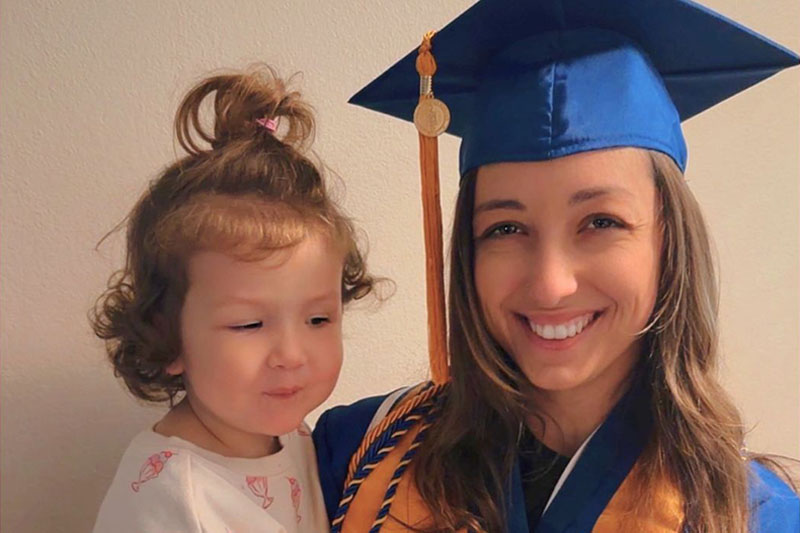
Delaney’s route to respiratory therapy was hands-on from the start: an EMT certification earned at the start of the COVID pandemic, paramedic school at Fresno City College, and critical care work in a pediatric hospital in Arizona. When her family returned to California, the jobs available to her — back on the ambulance, or an ER tech role — didn’t match what she’d already experienced in acute care.
“The pay and hours were very difficult,” she recalls. “It just wasn’t what I was looking for.”
A waitlist notice from Napa Valley College felt like a closed door — until, a month before the semester started, an email arrived: You’re in.
Napa Valley College’s program is deliberately structured around a four-day week, built so students can keep working while they train — a design choice that reflects the same regional thinking behind BACCC’s healthcare pathway work: healthcare training has to fit around students’ real lives, or it doesn’t reach the students who need it most.
Even with that flexibility, Delaney nearly left the program after her second semester, overwhelmed by tuition, a new baby, and caregiving responsibilities. Program director Ricardo Guzman changed that trajectory, encouraging her to apply for scholarships she didn’t know existed.
“I really didn’t think community college scholarships were available,” she says. “In my mind, you get a scholarship to a big university. You do not get a scholarship as a working mom at community college.”
She received six scholarships in total, including the Napa Valley College Promise Scholarship — financial relief she says made staying in the program possible. Guzman and fellow instructor Ken Tok went further still, calling employers and writing letters of recommendation that led to multiple job offers before she’d even graduated.
Delaney is now weighing offers, with an eye toward pediatric critical care — the specialty that first drew her into healthcare. Her paramedic background gave her a clinical head start, but it also meant some unlearning: managing a ventilated patient from an ICU perspective, she found, looks very different than stabilizing someone for transport.
Delaney’s path reflects a challenge facing healthcare students across California: the financial precarity of returning to school mid-career. Late in the program, a second layoff for her husband left the family briefly without health insurance — a frightening gap for someone managing a chronic health condition of her own.
“It was terrifying,” she says simply.
The path was hard-won. But the destination — a career in pediatric respiratory care — feels exactly right.