East Bay

Subregion Overview

The East Bay Subregion is the largest subregion within the BACCC. It spans two counties–Alameda and Contra Costa–with a total population of 2.8 million people.

In 2023, the East Bay was also home to the 50th largest economy in the world and included 1.2 million jobs.

The 10 community colleges sit within a complex ecosystem of 4 workforce development boards, over 40 local education agencies, 33 cities, two national labs, and a diverse set of industry partners.


Subregional Director

Sara Goldware
sara.goldware@baccc.net

Counties served:
Alameda, Contra Costa

Sara convenes community colleges, employers, and regional partners in the East Bay subregion to translate labor market data into shared priorities and coordinated action, aligning educational programs with local workforce needs and expanding opportunity for students and families across the region.

East Bay K12 Pathway Coordinators

Business & Entrepreneurship
Healthcare
Advanced Transportation & Logistics
Energy, Construction, & Utilities
Advanced Manufacturing

In Demand Sectors

The sectors in the East Bay with the highest demand for middle-skill workers with median hourly earnings of above $26 are:
  • Business & Entrepreneurship
  • Healthcare
  • Advanced Transportation & Logistics
  • Energy, Construction, & Utilities
  • Advanced Manufacturing

East Bay Regional Snapshot

East Bay Community College Contacts

Key Initiatives

Credit for Prior Learning Collaboration

Working with colleges across the Bay Region, East Bay colleges are exploring how to recognize and award credit for the unique sets of skills and experience our students bring into their education.

Early Childhood Education/Education East Bay Network

The ECE/EDU East Bay Network is a network of faculty, employers, and other stakeholders working to strengthen and support access to educator workforce pathways across Alameda and Contra Costa Counties.

K14 Pathway Collaboration

The East Bay creates opportunities throughout the year for K12 and community college colleagues to connect, share best practices, and support each other in order to create stronger career pathways for students that start in high schools and continue into our network of colleges.

Success Stories

two young men standing together

From Community College to Civil Engineering Career

Standing in front of a research poster at California State University, East Bay’s Braddock Center for Science and Innovation, a group of community college students explained their surveying project to a room full of industry professionals, faculty, and fellow students. Their poster bore the logos of CSUEB’s School of Engineering, Growth Sector, and EDAP.
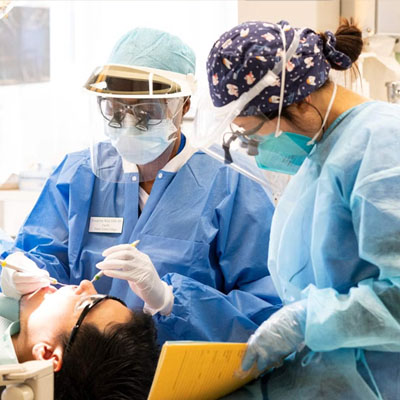
Two dental professionals in scrubs and masks working on a patient

Starting From Scratch

Charles Gomez graduated high school in 2011 with plans for art school — until the cost put it out of reach. “I just didn’t have the resources to even consider that,” he says.