Workforce Partnerships
Overview
Every day, Workforce Boards and Community Colleges work hard for the same students and jobseekers. But too often we do that in parallel rather than as a unified ecosystem. Yet students, job seekers, and employers experience their journey as one continuous pathway. This fragmented approach places undue burdens upon those who are already struggling. The greatest opportunity lies not in creating new programs, but in transforming how we work together.
BACCC’s Workforce Partnership is working to move beyond coordination to true cross system collaboration. One where regional priorities align, labor market intelligence is shared, and initiatives are co-designed with industry, resources are braided, and duplication is reduced. Through deeper collaboration, we help create a more coordinated workforce ecosystem that expands opportunity for learners, meets employer demand, and strengthens the Bay Area’s economy.
Our Goal is to develop a system of support to optimize collaboration between Workforce Development Boards and Community Colleges utilizing these 3 strategies:
Regional Director
Lora Jorgensen
lora.jorgensen@baccc.net
Lora leads cross-system initiatives that align community colleges, Workforce Development Boards, employers, and public agencies to remove barriers and create a more connected workforce ecosystem.
Cross-System Awareness
Build a cross-system awareness campaign around partner structures, resources and the benefits of collaboration.
The Bay Area’s workforce challenges cannot be solved by any one organization alone. While community colleges and Workforce Development Boards share a common mission, each often has a limited understanding of the other’s strengths, resources, and opportunities for partnership. BACCC Workforce Partnerships bridges that gap by bringing together education, workforce, employers, labor, and regional leaders to build stronger relationships, align strategies, and co-create solutions. Through deeper collaboration, we help create a more coordinated workforce ecosystem that expands opportunity for learners, meets employer demand, and strengthens the Bay Area’s economy.
Collaboration
Create new spaces for joint dialogue and exploration of collaboration possibilities.
Imagine a California where Community Colleges and Workforce Boards move in sync; align strategies, speak with one voice to industry and co-design programs together that lead seamlessly from classroom to career.
Our greatest opportunity lies not in creating new programs, but in transforming how we work together. By building shared leadership, common language, aligned metrics, and a culture of trust, community colleges and workforce boards become catalysts for regional economic resilience and innovation. Together they can anticipate industry shifts, respond more quickly to emerging workforce needs, and ensure every learner has access to coordinated support from education to employment. True collaboration shifts the conversation from organizational success to regional success, creating a stronger talent pipeline, healthier communities, and greater economic mobility for all. That is exactly what Barrier Breakers is destined to do.
Key Initiative: Barrier Breakers
Barrier Breakers is a statewide co-design leadership development initiative between Colleges and Workforce Boards. Building on lessons from the RERP grant, money alone does not produce measurable outcomes; it requires shared leadership, operating practices, and cross-system infrastructure. A facilitated cohort of approximately 40 leaders, seek to operationalize a co-design approach for moving away from silos to integrated systems. Initial focus will be around building a shared vision for this work, breaking down silos, and identifying the difference between real and perceived barriers that often stand in the way. From there, regional teams will be formed to co-design solutions to shared workforce challenges, strengthen partnerships, and develop implementation ready projects. This next phase keeps Barrier Breakers moving from ideas to action while creating a strong case for future investment and expansion.
This project will be organized around a Discovery Phase, Customized Barrier Breakers Curriculum Development, one immersive kickoff experience, six months of regional team collaboration, an Innovation Showcase, implementation readiness planning, individualized coaching for the Accelerator Cohort, continued engagement through the Emerging Projects Cohort, and the establishment of a sustainable innovation pipeline. Cohort 1 begins fall of 2026.
Intervention
Identify barriers to cross system collaboration and design and or implement intervention strategies.
Many of the greatest challenges to workforce collaboration are statewide systemic barriers rooted in policy that unintentionally create duplication, confusion, and unnecessary administrative burden. BACCC works alongside community colleges, Workforce Development Boards, state agencies, and regional partners to identify these barriers and develop practical, collaborative solutions.
Our work alongside Workforce Development Boards, Regional Occupational Centers and Adult Schools to reform California’s Eligible Training Provider List (ETPL) is one example of how cross-system leadership can streamline processes, expand access to training, and strengthen connections between education and workforce systems for the benefit of learners, employers, and California’s economy.
Key Initiative: Eligible Training Provider List (ETPL)
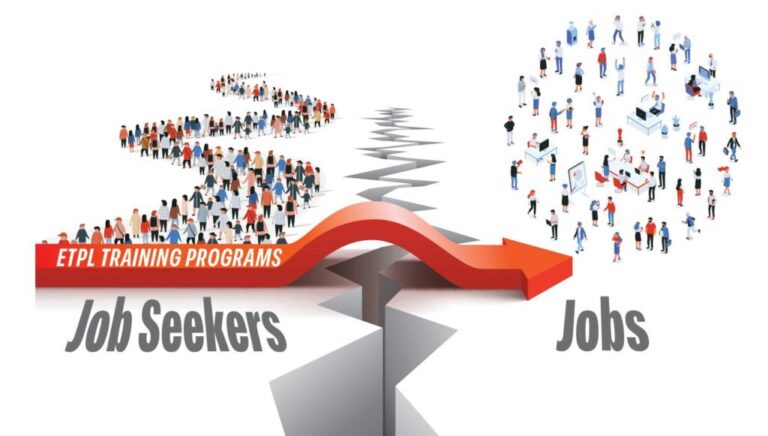
The Eligible Training Provider List (ETPL) is a list of training programs that are approved by a local workforce agency. It is the ONLY list of programs that job seekers can use when selecting vital training at a job center if they want access to federal workforce development funds allocated to CA.
Unfortunately, due to the way the program has been structured, ETPL restricts low income job seekers from accessing the full range of existing training programs because of complex processes providers must go through to get on & stay on the ETPL list. BACCC’s Workforce Partnership has spent 2-3 years working on various advocacy campaign to change the way the system works and increase equity & access