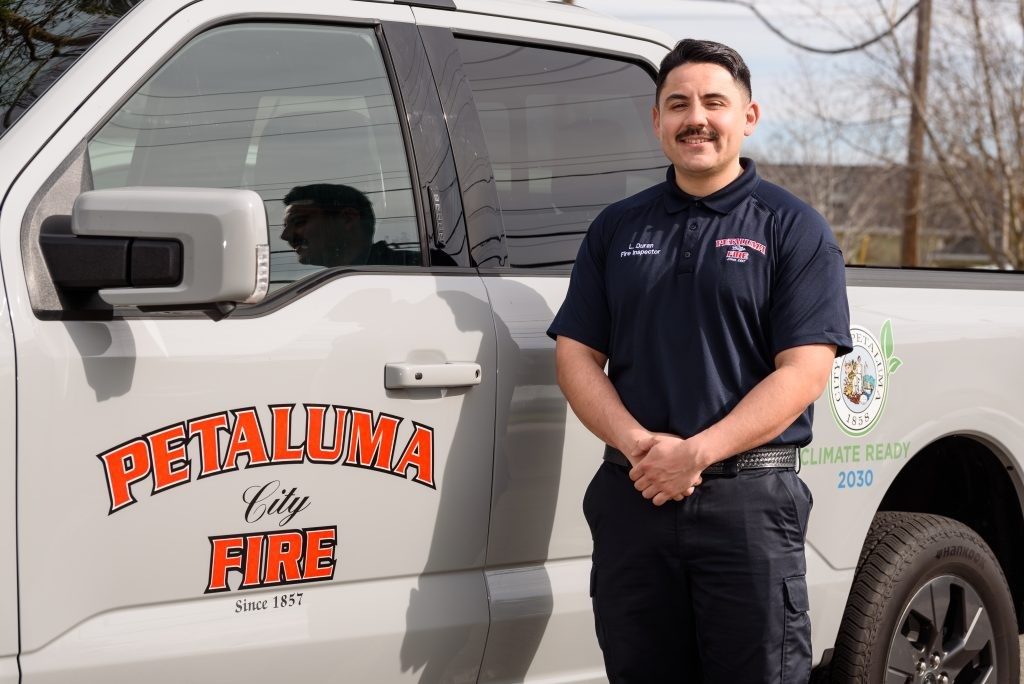
Lupe Duran’s path into the fire service started with a fire. When the Tubbs Fire destroyed his home, he didn’t step back from the devastation — he moved toward it, determined to become part of the response instead of just another person affected by it.
In January 2023, Lupe enrolled in the Fire Foundry program at the College of Marin — a BACCC-supported partnership between the college and the Marin County Fire Department built specifically to open pathways into the fire service for people who don’t typically see themselves in that career. He enrolled in the College of Marin’s EMT program at the same time, earning his NREMT certification while also joining the Foundry Fuels Crew with the North Bay Conservation Corps, where he got hands-on experience in wildfire fuel management — the kind of preventive work that reduces the odds of the next Tubbs Fire.
His commitment went beyond the field. Lupe contributed to a fire suitability model with the UC Berkeley Disaster Lab, work recognized at a Berkeley Climate Conference and directly tied to the region’s long-term wildfire resilience planning.
This is exactly the kind of workforce pipeline BACCC works to build through its regional employer and workforce board partnerships: a fire department, a conservation corps, and a research lab, all connected through a single community college program, turning one person’s worst day into durable regional capacity for the next fire season.
Lupe has since advanced to Advanced Recruit status within the Fire Foundry program and now works as a seasonal employee with the Marin County Fire Department, with applications submitted to the Petaluma Fire Department and a regional Fire Academy.
Lupe’s story shows what’s possible when community colleges, regional employers, and conservation agencies work in the same direction: personal loss, turned into community-wide benefit.